
Need solar help in Dallas-Fort Worth?
A home EV charger should fit the vehicle, parking location, daily driving routine, electrical panel and any solar or battery plans already in motion. Solar Repair Pros helps Dallas-Fort Worth owners plan EV charger installs around the property they actually have.
Solar System Problems?
We Can Help
EV CHARGER PLANNING
The fastest charger is not always the smartest charger. Available panel capacity, nightly charging time, vehicle limits, parking position and possible load management should all be considered before selecting equipment.
Typical mileage and overnight parking time help determine whether a lower charging rate already meets the household routine.
The proposed charger load must be considered with the existing service, major appliances and any planned solar or battery work.
Charger position, connector reach, trip hazards and how vehicles use the space affect the practical mounting location.
Weather exposure, equipment rating, impact protection and cable routing matter for garages, carports and exterior parking.
CHARGER PLANNING
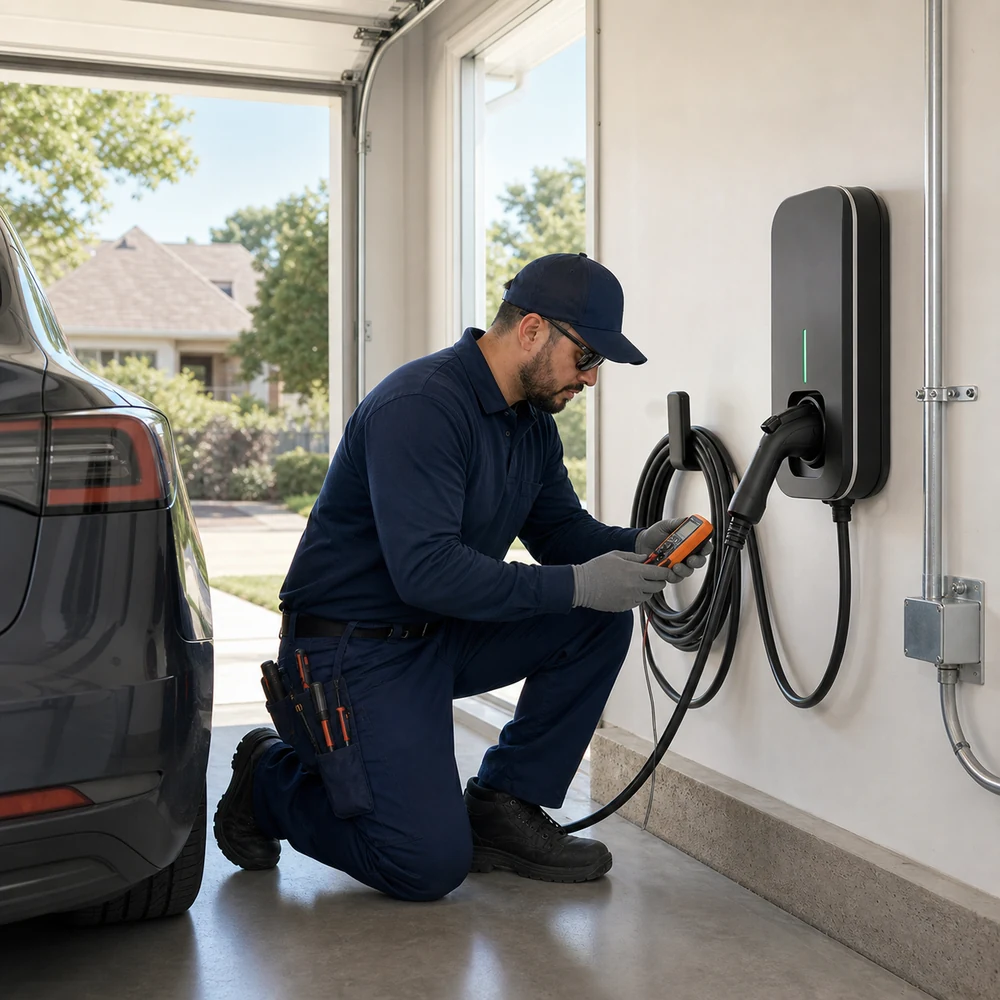
A charger should fit how the vehicle is actually used, where it parks, and what the electrical panel can support. Some homes need faster charging, while others only need reliable overnight recovery. Planning around the routine helps avoid paying for a setup that is larger or less practical than necessary.
WHY SIZING MATTERS
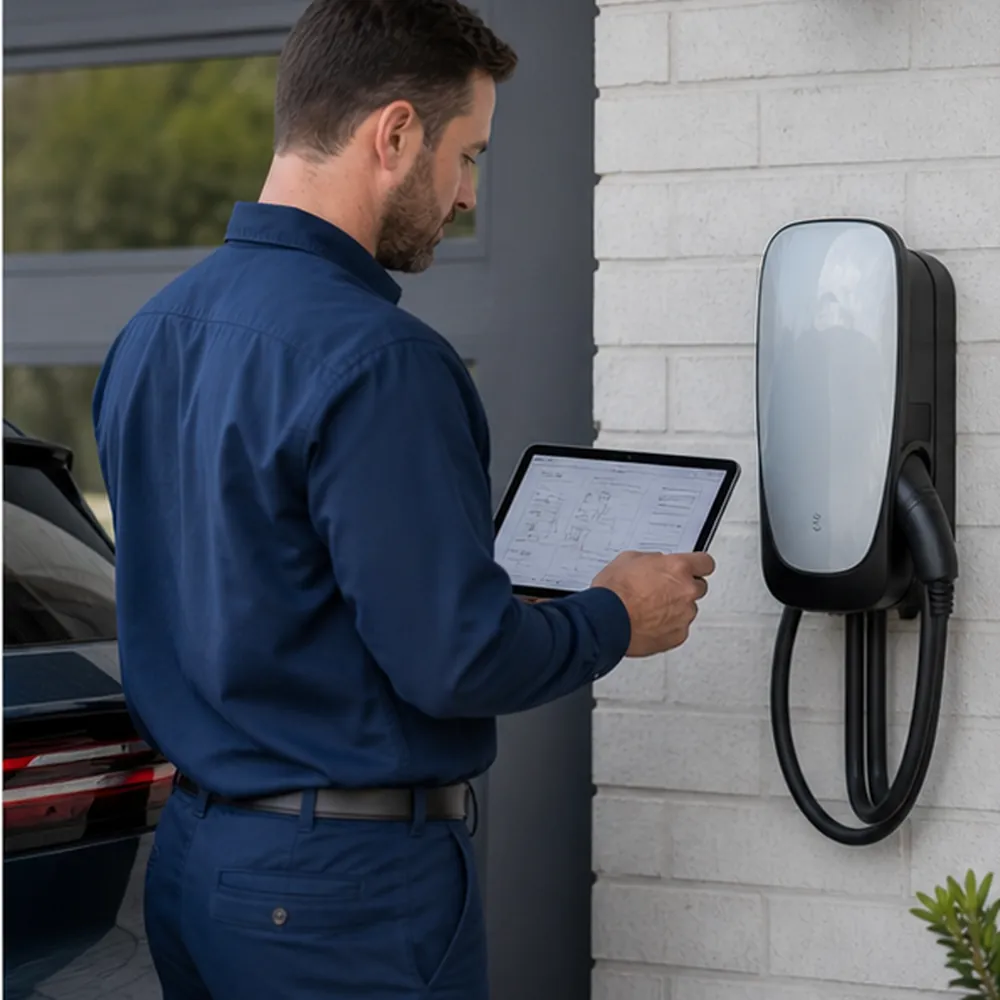
The best charging setup is the one that restores the range you need without creating avoidable electrical work. Daily mileage, available charging time, charger settings and cable reach all matter. When those details are clear, the installation can be matched to the property instead of guessed from the car alone.
RELATED SERVICES
EV charging often connects to panel capacity, solar production and future battery plans. Looking at these services together helps Dallas-Fort Worth owners avoid installing a charger that creates a new electrical problem.
Capacity and panel-space planning when a charger or future electric loads need more infrastructure.
Storage planning that considers backup priorities, vehicle charging and existing solar equipment.
Diagnosis for damaged modules, output changes and recurring solar system faults.
Condition and performance checks that help establish the array baseline before new charging loads.
EV CHARGER INSTALLS FAQS
Practical answers before choosing home EV charging equipment, outlet location, charger size or electrical panel work in Dallas-Fort Worth.
Start with daily mileage, the vehicle’s onboard AC charging limit and the hours normally available overnight. The useful target is enough recovered range for the routine, with capacity and future needs also considered.
Possibly. Portable equipment must be used with a suitable outlet and according to its instructions. Regular high-power charging from an outlet deserves careful assessment of the circuit, outlet condition and intended duty.
Not always. Existing service capacity, household loads, charger setting and possible load-management options all affect the answer. The panel should be assessed before the charger circuit is finalized.
Choose a position that gives reliable connector reach without creating trip hazards or straining the cable. Weather exposure, impact protection, mounting surface, parking habits and the route back to the panel also matter.
Yes, but integration expectations need care. Solar production does not automatically guarantee direct daytime charging, and battery capacity may be better reserved for other loads. The systems should be planned around the owner’s priorities and equipment capabilities.